Thoughtography Gizmos
Ted Serios was a hard-drinking, psychic doorman from Chicago who crudely crafted thoughtography gizmos by hand. As paranormal portals go, Serios’s gizmos were quite simple. They were nothing more than paper or plastic cylinders cut about one-and-a-half inches long and one-inch in diameter. Gizmos helped Serios to seemingly transmit images of warped and distorted faces, vehicles, and shapes from his mind onto the surface of Polaroid film contained in instant cameras.
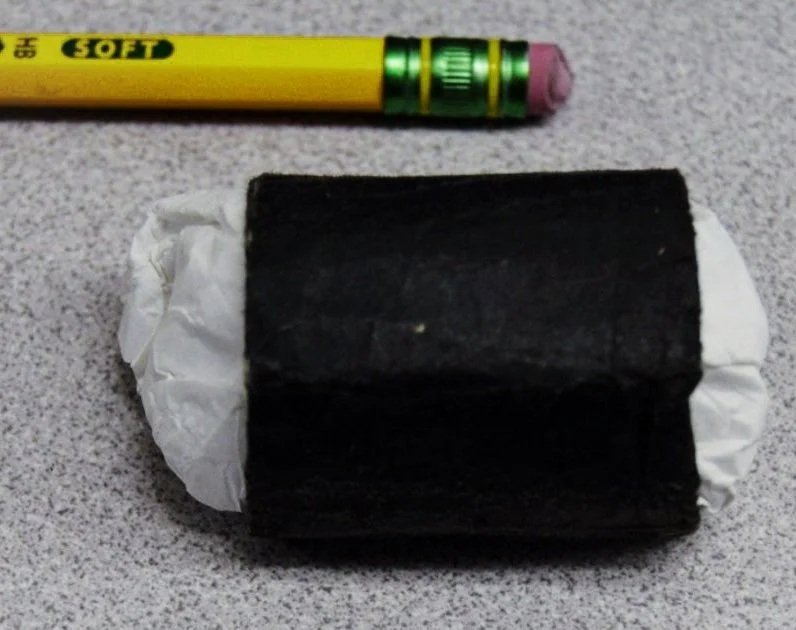
One of Ted Serios's Thoughtography gizmos with pencil for scale. (c. 1960s.) Jule Eisenbud Collection, Albin O. Kuhn Library, University of Maryland, Baltimore County. Photo by Edmund B. Lingan. (2018.) Dr. Jule Eisenbud was a Professor of Psychiatry at the University of Colorado Medical School and parapsychologist who at first doubted reports of Serios’s ability to transmit images from his mind to Polaroid film safely tucked inside instant cameras.
The gizmo made Eisenbud suspicious when Serios first demonstrated thoughtography for him at the Palmer House hotel in Chicago. After examining it closely, the parapsychologist found “nothing in it or on it to justify suspicion” (Eisenbud 12).
With his suspicions thus dismissed, Eisenbud allowed Serios to use gizmos during his years-long collaboration with Serios. Eisenbud arranged the controlled conditions and Serios sent images from his mind, through the gizmo, onto the film in the presence of professors, scientists, and magicians. Witness statements were signed; all experiment details were recorded.
Serios’s demonstrations were stormy. The thoughtographic photographer placed the gizmo near or against the camera lens while peering at it with an intense demeanor. His eyes widened and bloodshot as if they were burning the image into existence with invisible rays. His lips pressed. His body tremored. His face reddened, and the veins on his forehead became visibly raised.
The display reminded Eisenbud of an allergic reaction.
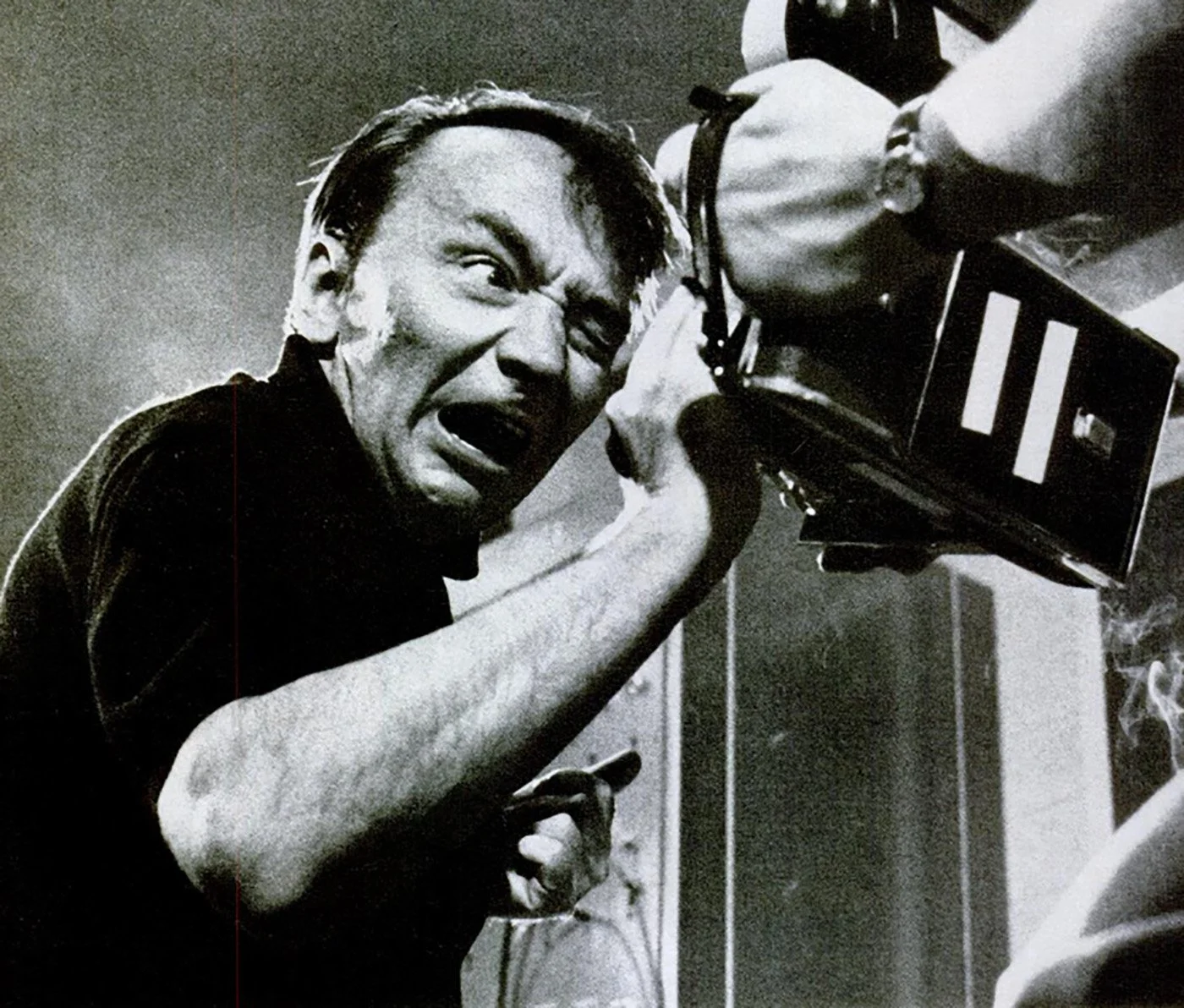
Ted Serios using a gizmo while in trance during a thoughtography session. (1967.) Public domain. Wikimedia Commons. https://commons.wikimedia.org/wiki/Category:Ted_Serios#/
Some of the photos that emerged during the sessions were “whities” showing a solid white background within the border of the photograph. Others were “blackies,” with only blackness on the film.
Most prized were photographs containing mysterious images with no apparent relationship to anything inside or outside the room in which the thoughtography demonstrations took place.
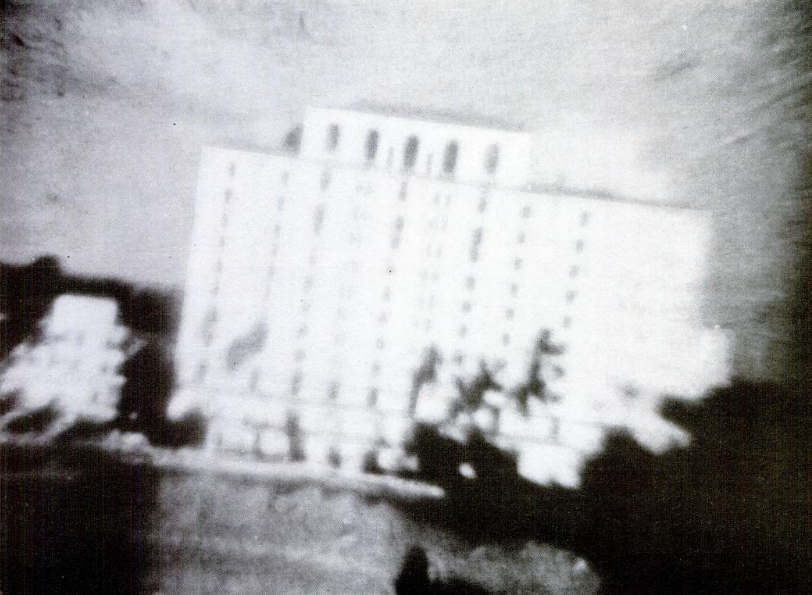
A thoughtograph by Ted Serios featured in the article "A Man Who Thinks Pictures". (LIFE Magazine. 22 Sep 1967.) Public Domain. Wikimedia Commons. https://commons.wikimedia.org/w/index.php?curid=57059268The spectacle of thoughtography ceased for Serios in 1967, when his thoughtographic powers vanished suddenly.