The Occult, Games, and Human Play: Part I, Consecrating the Playground
One of the most fascinating aspects of the occult is its tendency to transform ordinary things into sacred ones. Brooms become ritual tools. Rooms become temples. Games and play become gateways to spiritual experience.
A long and close relationship exists between the games, sports, and performances people turn to for entertainment, and the sacred arts and rituals that ceremonial magicians, witches, and esoteric priestesses use in their spiritual and magical work.
The history of tarot cards provides one example of the relationship between the occult and human play. Before their transmutation into the immensely popular tool of magical divination that they are today, the major and minor arcana of the tarot were nothing more than so many pieces of a trick-taking card game called tarocchi, which became popular in Italy during the fifteenth century. The transformation of the tarot began in 1781, when Antoine Court de Gébelin published Le monde primitif (The Primitive World), in which he proposed that a popular tarocchi deck—the Tarot of Marseilles—had a lineage tracing back to ancient Egypt and the god Thoth.
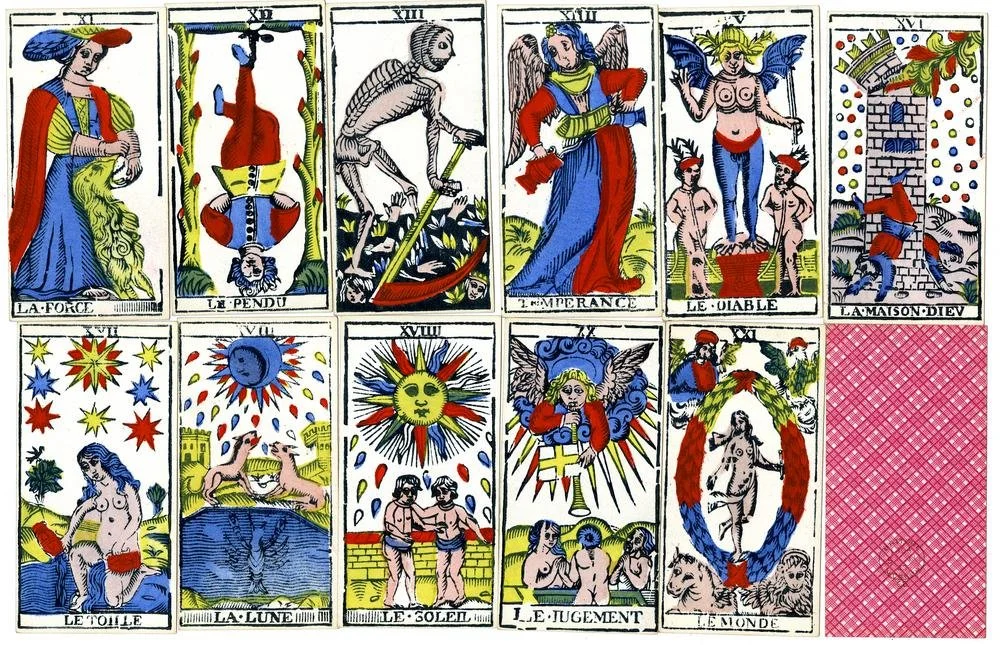
Select major arcana cards from the Tarot of Marseilles. Courtesy Trustees of the British Museum. Source: https://www.britishmuseum.org/collection/object/P_1904-0511-47-1-78. Use Attribution: NonCommercial-ShareAlike 4.0 International (CC BY-NC-SA 4.0) license. From that time on tarot cards were consecrated for a sacred and magical purpose. Several other games and toys have been put to esoteric use, including talking boards (Ouija being the most famous), dice, Mancala, and chess, among many others.
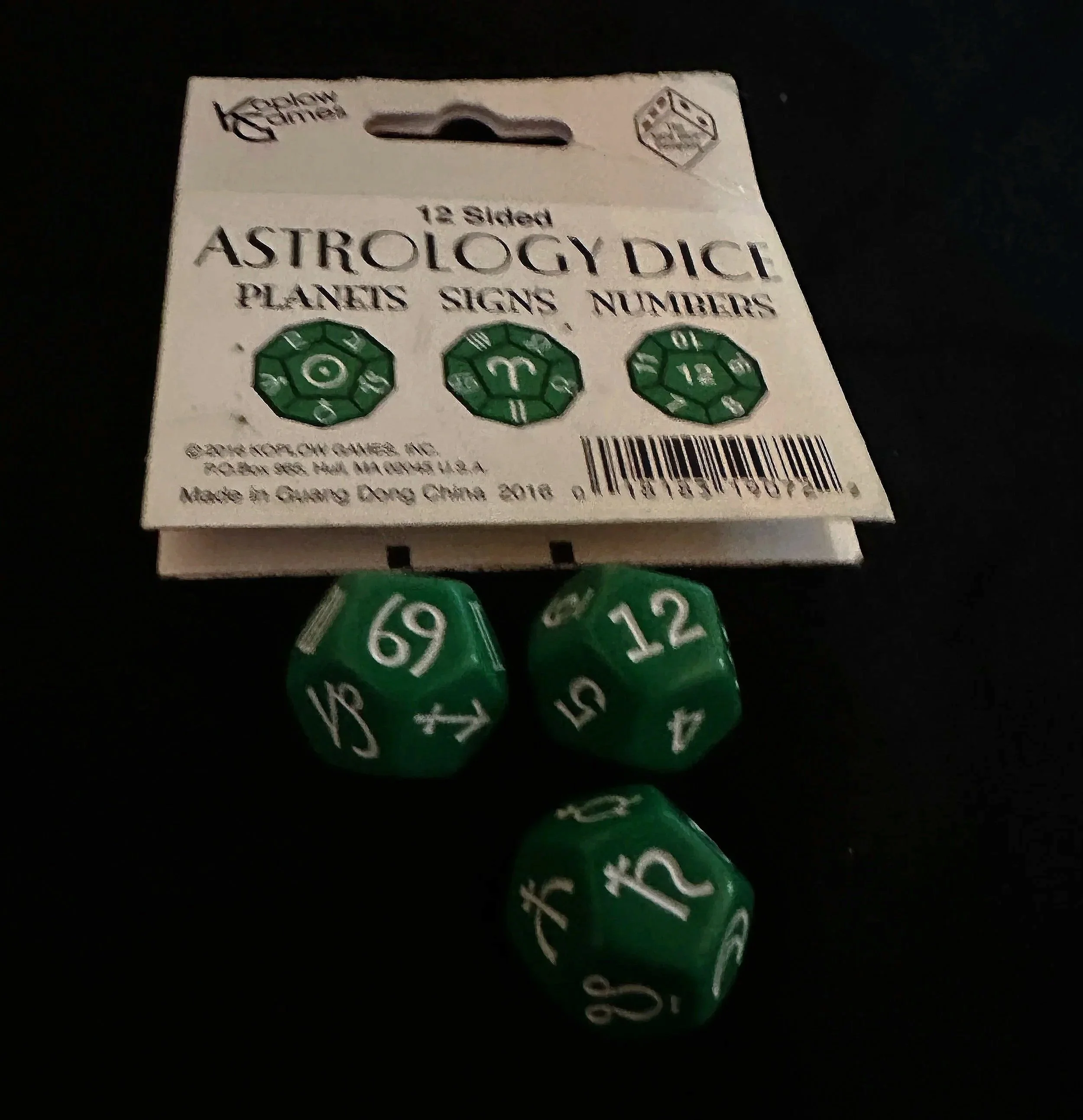
Astrological divination dice. Photo by author. (2026)Many great minds have explored the kinship between play and occult ritual. Among these is the Dutch historian, Johan Huizinga (1872-1945). In Homo Ludens: A Study of the Play Element in Culture (1938), Huizinga lists several characteristics of human play and then compares playing and pretending for the purpose of entertainment to the esoteric practices and magical rituals of secret societies, priests, priestesses, sorcerors, and witches.
Huizinga notes that in all cases human play exists outside of “ordinary” or “real” life. Play is a brief “intermezzo” that creates a magical space within the otherwise unbroken flow of so-called “real life.” This separation from the mundane world is made possible by one of the most important and universal aspects of play: creating the playground in which a game, competition, or performance will occur. Within the playground, with its special rules and reality-defying logic, Huizinga sees a parallel between human play and sacred ritual.
Arguing that the playground is no different than the “consecrated spot” of any other ritual, Huizinga writes:
[T]he “consecrated spot” cannot be formally distinguished from the playground. The arena, the card table, the magic circle, the temple, the stage, the screen, the tennis court, the court of justice, etc. are all in form and function playgrounds, i.e., forbidden spots, isolated, hedged round, hallowed, within which special rules apply. All are temporary worlds within the ordinary world, dedicated to the performance of an act apart.
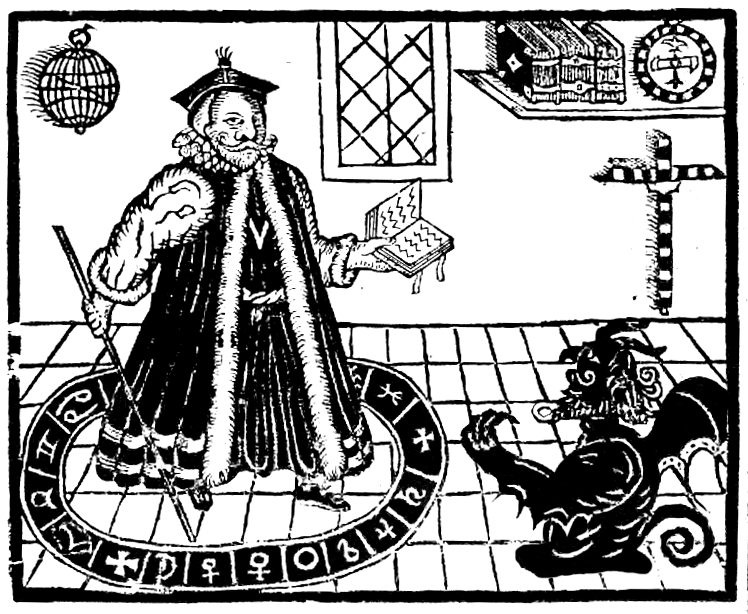
Dr. Faustus stands with accoutrements of necromancy in his consecrated magic circle as he invokes Mephistopheles. Woodcut from the title page of 'The Tragicall History of the Life and Death of Doctor Faustus' (1628) by Christopher Marlowe. Source: https://commons.wikimedia.org/wiki/File:The_Tragicall_History_of_the_Life_and_Death_of_Doctor_Faustus_%281628%29_-_woodcut.png. Public domain.In the world of modern occultism, magic, and witchcraft, this “act apart” moves beyond scoring points in a football game, winning at cards, or entertaining the crowd by playing the clown at the circus.
Unlike the fifteenth-century tarocchi player, whose table served as a physical location to take tricks in a card game, the tarot practitioner consecrates their card table as a playground where the physical, mental, and spiritual worlds intersect and interact. This consecration of magical space often involves symbols, objects, lights, and scents that possess special meanings for the tarot reader. Although the tarot reader may view these symbols and objects with the utmost sincerity and earnestness, a sense of play is often present in tarot sessions. The entertaining spirit of tarocchi may still enliven contemporary tarot divination sessions.
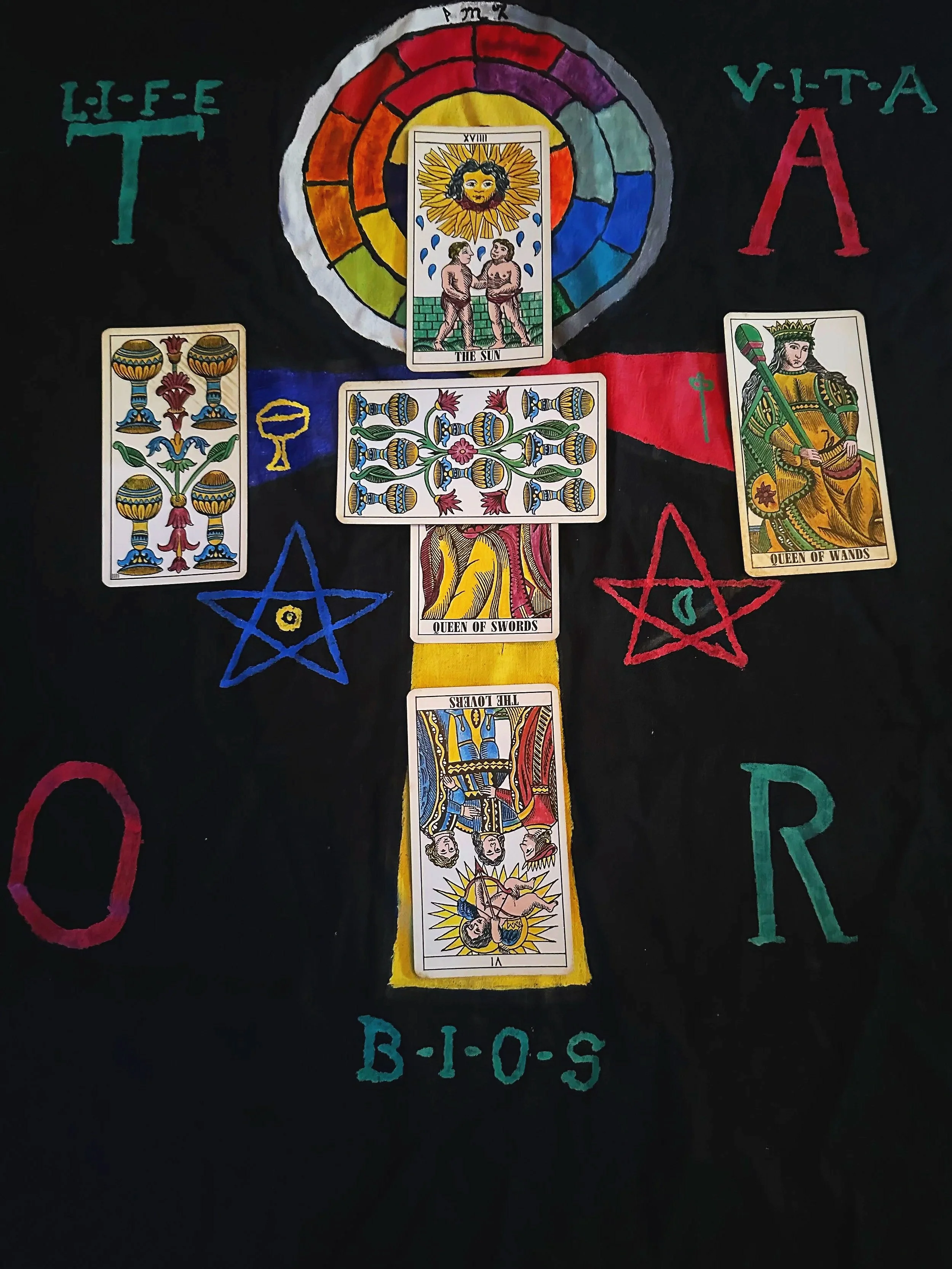
Tarot cards spread on a ritual cloth. The ritual cloth serves as the consecrated playground for the act of divination. Photo by author. 2026. This blend of play and seriousness, of mirth and sacredness, is frequently present in the initiation ceremonies of secret societies, the rituals of Wiccans and Druids, and the divinatory practices of cartomancers. This mystically dissonant blend is a defining aspect of the world’s esoteric landscape, which offers virtually limitless space for the consecration of occult playgrounds.
This is the first of a series of posts about the relationship between play, games, and occult practices.