Katherine Tingley and the Theatre of Transformation at Lomaland
The ornate round buildings, topped with monochromatic stained-glass domes and hovering over the edge of the Pacific from the cliffs of Point Loma, California were unlike any other structures in the U.S. when they were erected at the turn of the twentieth century. At Lomaland, headquarters of the Universal Brotherhood and Theosophical Society, such architectural wonders were commonplace. Home to hundreds of Theosophists seeking the hidden truths of a Secret Doctrine predating the doctrines of all major world religions, Lomaland bustled with processions, pageants, lectures, and theatrical performances. Behind the emergence of this unusual community stood one of the most influential, yet largely forgotten, figures of the American Occult Revival: Katherine Augusta Westcott Tingley (1847-1929).
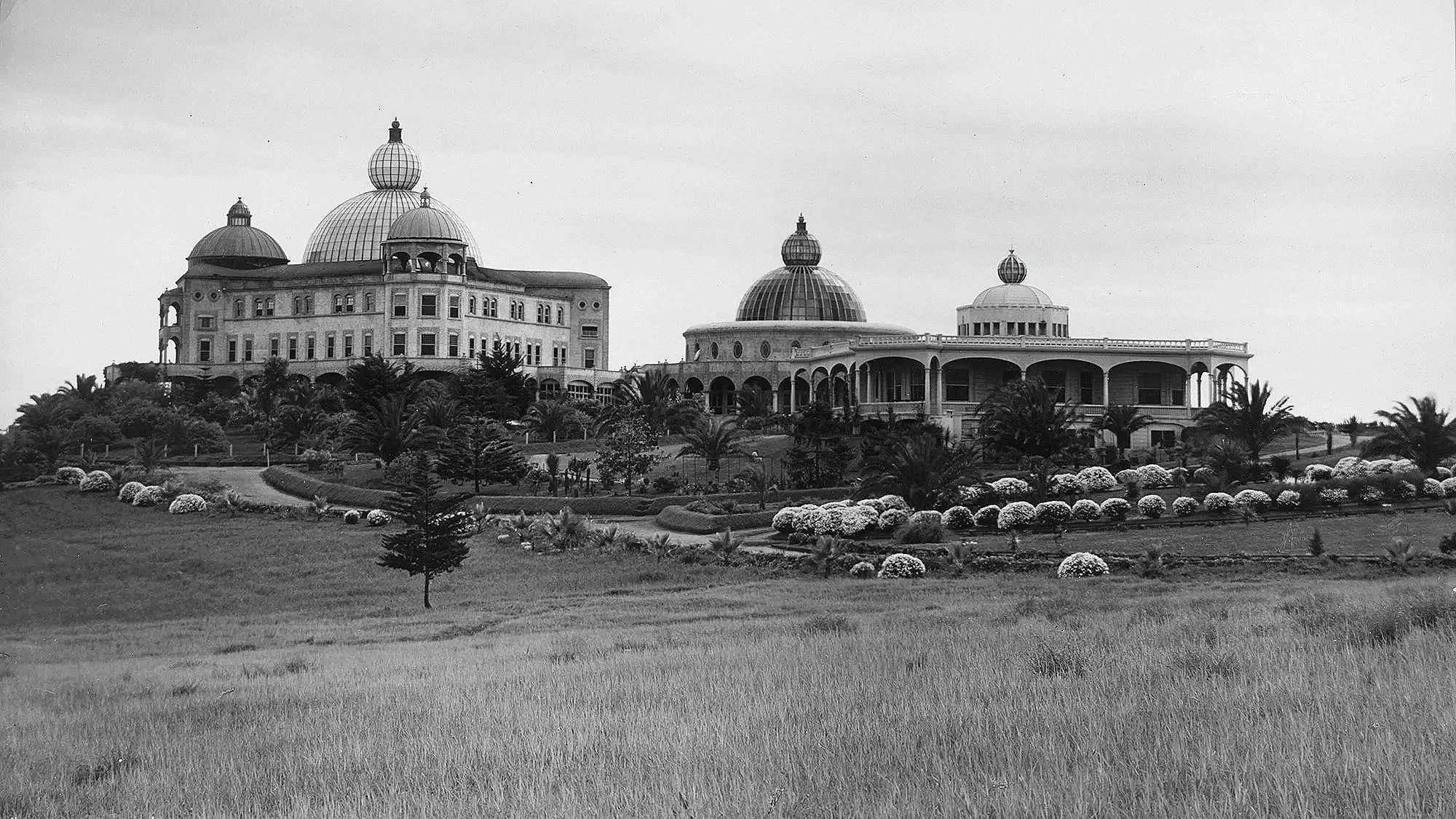
Two of the round, domed buildings of Lomaland. Photo courtesy of The Theosophical Society, Pasadena, CA. Tingley became America’s leading Theosophist after the death of William Quan Judge in 1896. Judge had co-founded the Theosophical Society in New York City with Helena Petrovna Blavatsky and Henry S. Olcott in 1875. Once Tingley became the organization’s leader, she changed the name of the Theosophical Society in America to the Universal Brotherhood and Theosophical Society (UBTS). Soon thereafter Tingley set an ambitious plan into motion that would lead to the establishment of new headquarters on the Point Loma peninsula overlooking San Diego.
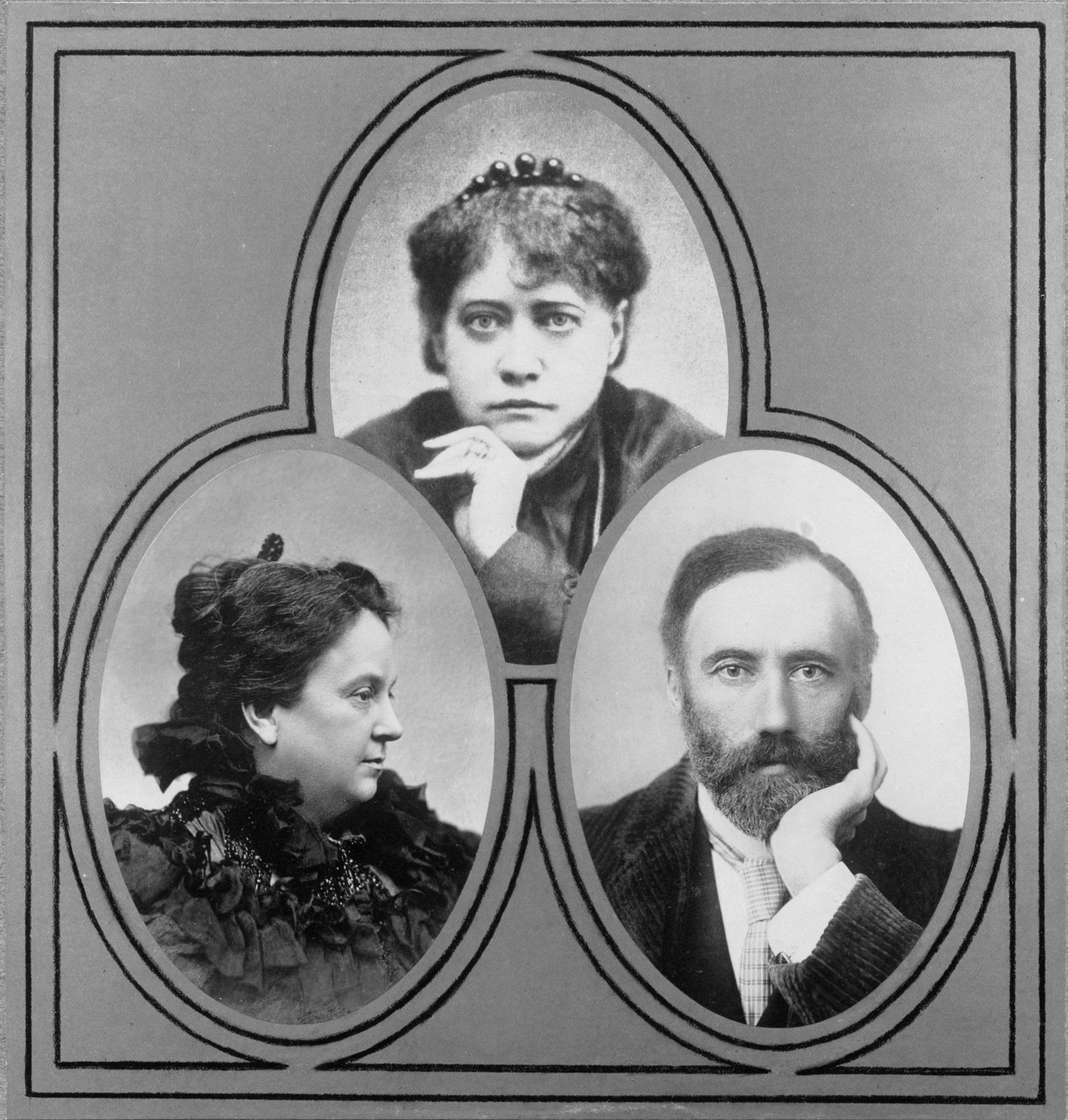
From left to right: Katherine Tingley, Helena Petrovna Blavatsky, and William Quan Judge. Photo courtesy of The Theosophical Society, Pasadena, CA.Tingley personally oversaw the publicity, fundraising, and development of the new headquarters, which hundreds of residents affectionately called "Lomaland." Over the following decades, the community became known for its distinctive architecture, its educational programs, and theatrical and musical performances given in one of the first outdoor Greek theatres constructed in the U.S.
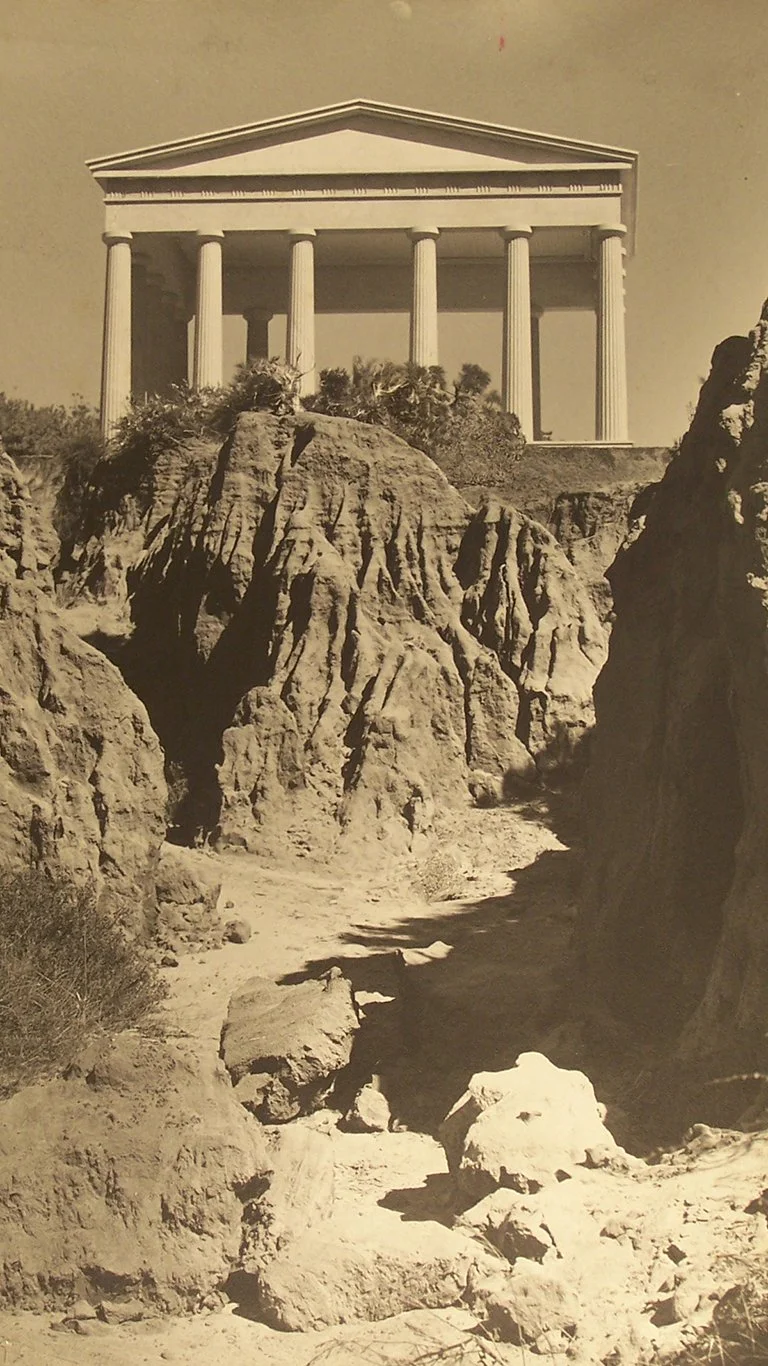
A view of Lomaland Greek Theater on the cliffs. Photo credit Katherine Tingley. (ca. 1914) Courtesy The Theosophical Society Archive (Pasadena, CA).The idiosyncratic architecture and art of Lomaland reflected its unique mission. Tingley envisioned Lomaland as a living experiment in spiritual, creative, and ethical development. She believed that education, art, philosophy, religion, and community life could cultivate the highest qualities of human character, if they were approached in the proper manner.
In 1897, Tingley and a group of Theosophical delegates arrived at Point Loma after completing a worldwide crusade promoting Theosophy. On February 23 of the same year, they laid the cornerstone for what Tingley called the School for the Revival of Lost Mysteries of Antiquity on the grounds of Lomaland.
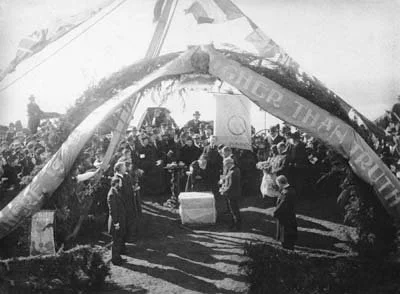
Tingley anointing the cornerstone of School for Revival of Lost Mysteries of Antiquity, February 23, 1897. Photo courtesy of The Theosophical Society Archive, Pasadena, CA.Despite its impressive name, the School for the Revival of Lost Mysteries of Antiquity was not a conventional school. There was no dedicated campus building bearing its name. Rather, it was a mission and a guiding ideal intended to shape every aspect of life at Lomaland.
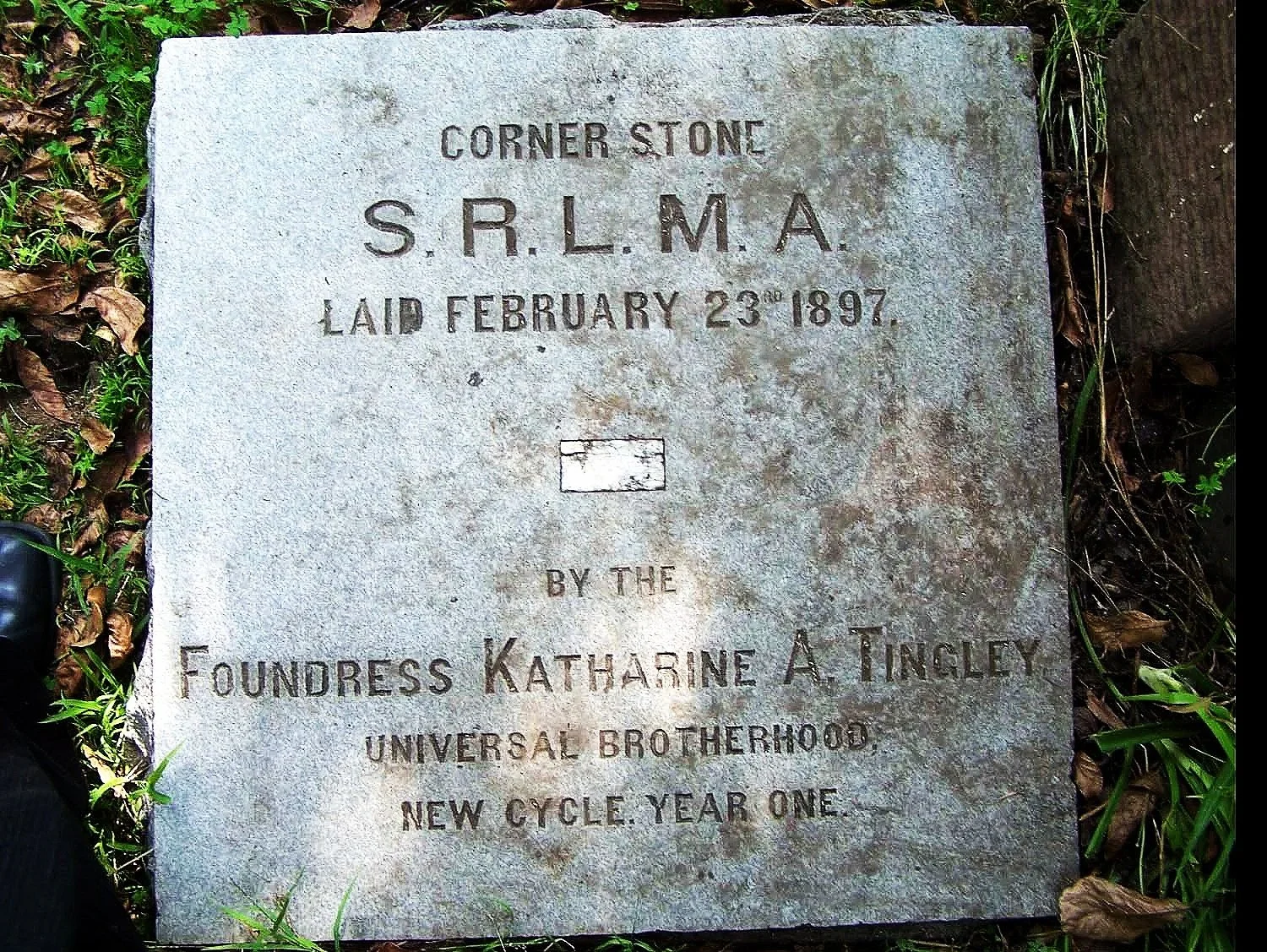
The cornerstone of the School for the Revival of Lost Mysteries of Antiquities. Photographed by author on grounds of The Theosophical Society, Pasadena, CA. (2006). Note: “Katharine” is spelled with an “a” instead of an “e” on the cornerstone. Tingley’s first name was most often spelled “Katherine” in print elsewhere. Tingley later explained this vision in a 1916 address titled "The School of Antiquity: Its Meaning, Purpose, and Scope." In this talk, Tingley described the school as an effort to recover the wisdom and achievements of the ancient world, with particular emphasis placed on those related to science, philosophy, religion, and the arts. The goal of these efforts was not antiquarian curiosity but, rather, facilitating human transformation.
Among the arts, Tingley placed special emphasis on drama. She believed that theatrical performance could cultivate self-discipline, character, imagination, and what she called the "soul qualities" of the individual. In many ways, theatre occupied a principal place in her vision of spiritual development.
Tingley’s view that theatre was an efficacious force for spiritual growth found expression throughout Lomaland. Whenever a play was produced in the Greek Theatre, the entire community participated in the process. Hundreds of Lomaland residents worked together to design and construct scenery, create costumes and props, rehearse and play music, operate outdoor lighting systems, photograph performances, and print elegant programs in the community's press offices.
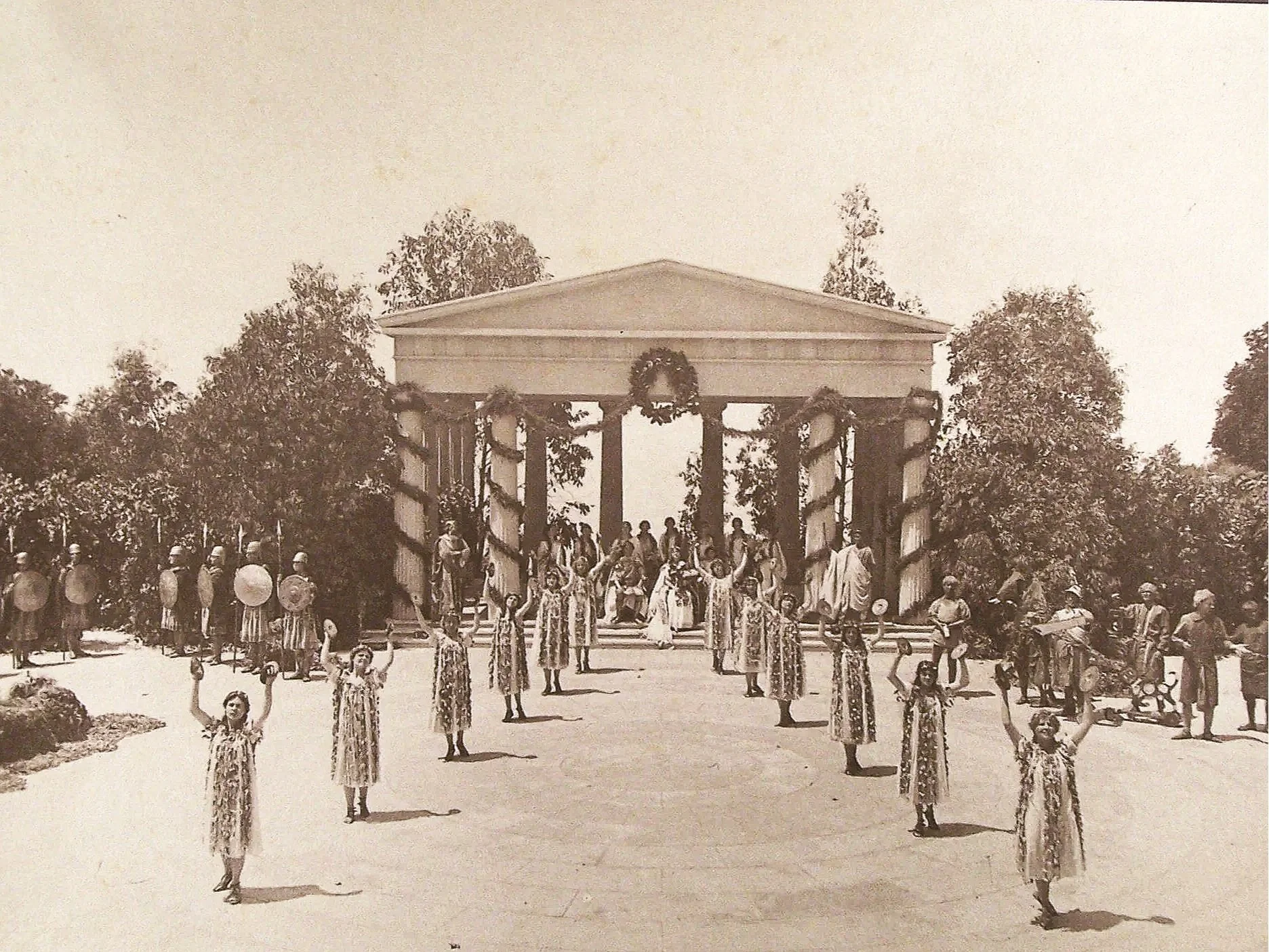
Actors in production in outdoor Greek Theater at Lomaland in Point Loma, CA. Photo credit: Katherine Tingley. (ca. 1919) Courtesy The Theosophical Society Archive (Pasadena, CA).In keeping the ancient Roman ideal that the arts should simultaneously delight and teach people, theatre at Lomaland functioned simultaneously as a form of entertainment and an expression of Theosophical ideals.
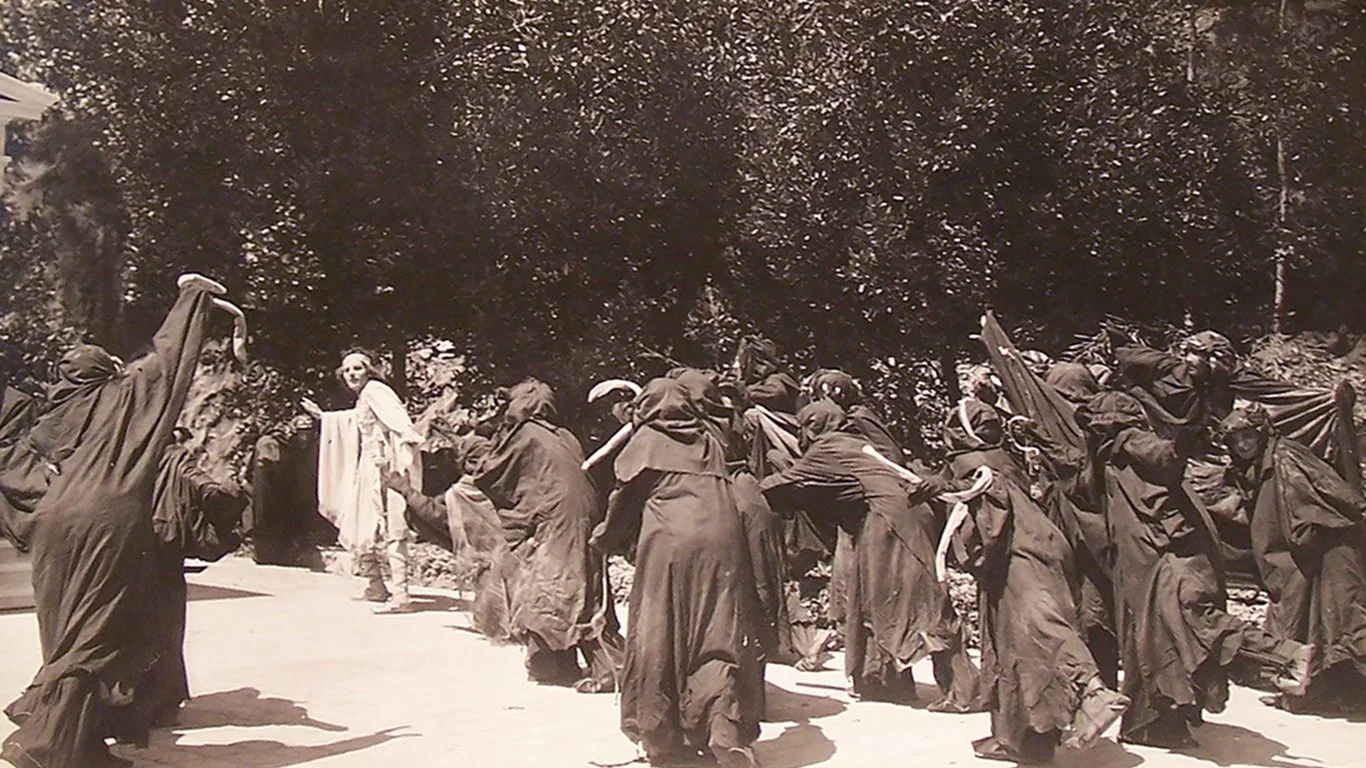
The Furies tormenting Orestes in a Lomaland Production of Aeschylus's "Eumenidies." (Ca. 1919) Photo credit Katherine Tingley. (ca. 1919). Courtesy The Theosophical Society Archive (Pasadena, CA).Aeschylus's Eumenides was produced at Lomaland on several occasions between 1897 and 1929. Tingley interpreted the famous transformation of the Furies into benevolent powers at the end of the Eumenides as representing the Theosophical tenet that human beings can overcome the lower aspects of human nature by following the guidance of the Higher Self.
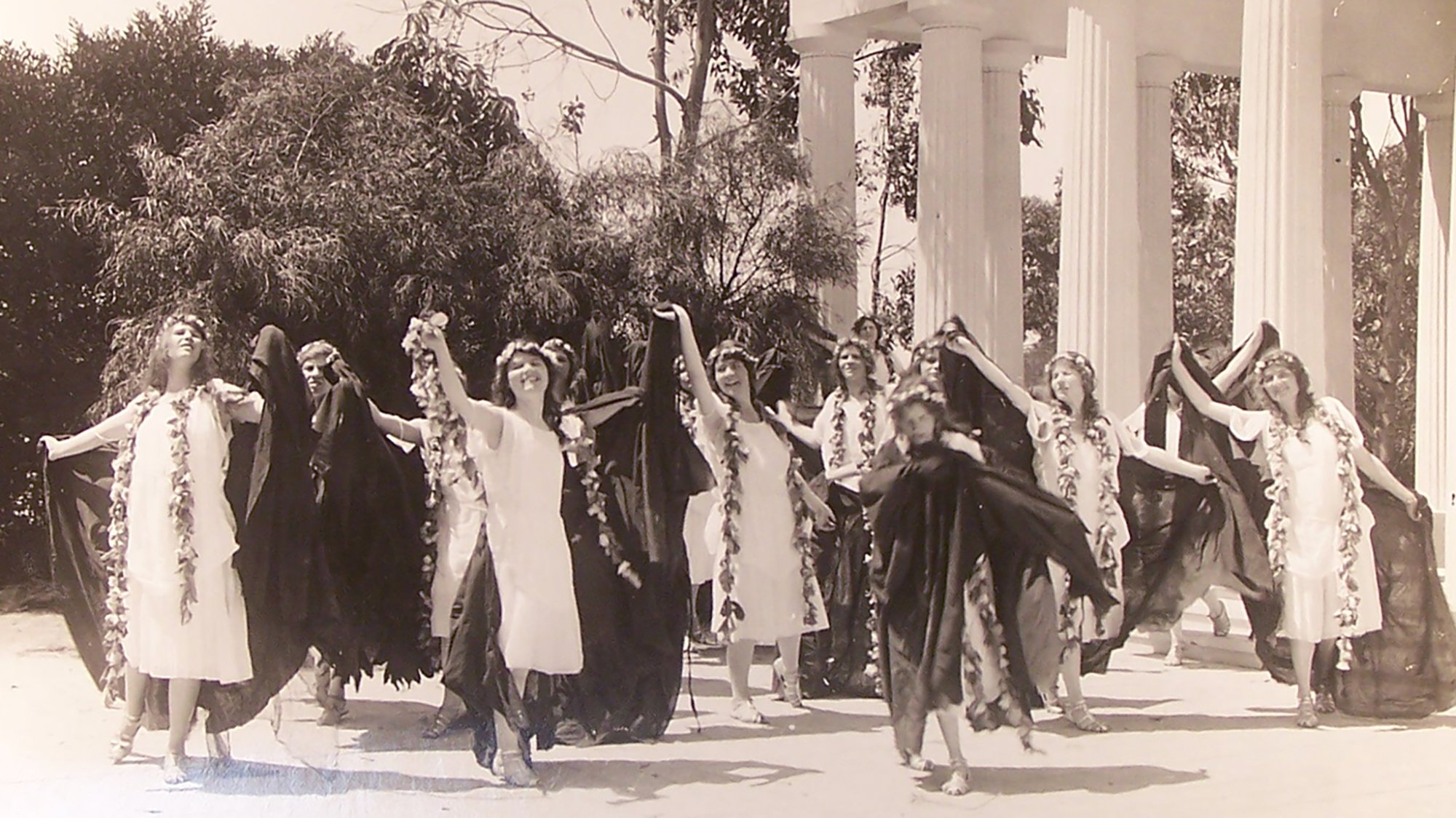
Furies transforming into Eumenidies (beneficent ones). Photo credit Katherine Tingley. (ca. 1919) Courtesy The Theosophical Society Archive (Pasadena, CA). Tingley's theatrical interests extended beyond classical drama. She also wrote and staged elaborate public pageants. Among the most ambitious of these was the Pageant of the Seven Kings, which was a peace parade presented by the Lomaland residents in the streets of San Diego during the First World War.
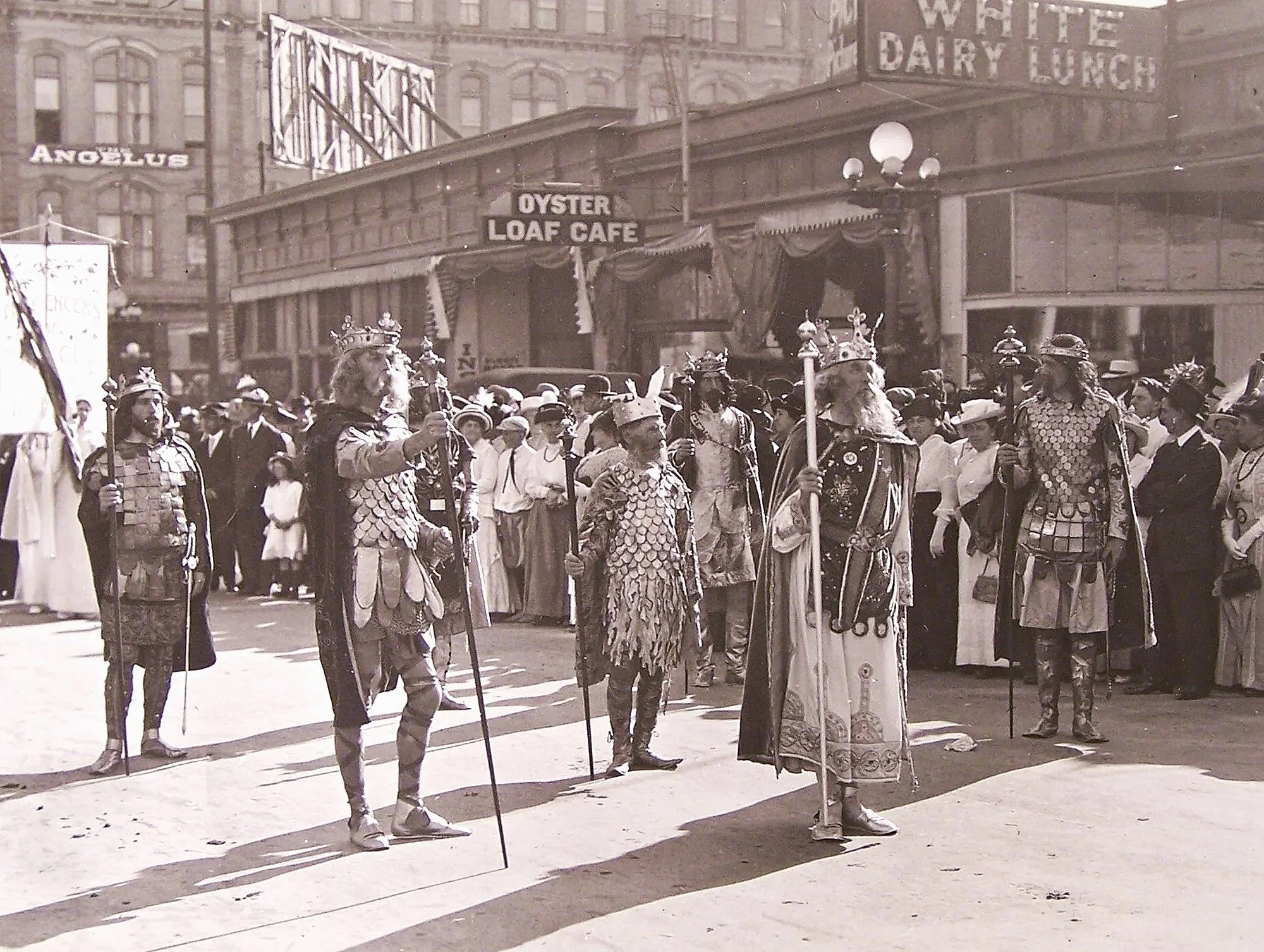
"Pageant of the Seven Kings." San Diego, CA (1914). Photo credit Katherine Tingley. Courtesy of The Theosophical Society Archive (Pasadena, CA).Tingley is one of the most fascinating and figures of Theosophical history in the U.S., and Lomaland is one of the most striking and successful alternative spiritual communities of the Occult Revival that flourished in the U.S. and Europe between the mid-nineteenth and early twentieth centuries.
Despite this, the story of Tingley and Lomaland and Tingley remains largely unnoticed. To learn more, see the chapter devoted to Tingley in my book, The Theatre of the Occult Revival: Alternative Spiritual Performance from 1875 to the Present (Palgrave Macmillan, 2014).