The Journal of a Methodist Minister and Accidental Occultist, Part I: Arrival of The Spirit Guide
The old and leatherbound book, with the word Journal embossed in gold, is a relic from an earlier era. It is the personal journal of Reverend Jeremiah Celdonus Sinclair (1861–1935), who served in Ohio as a minister of the Methodist Episcopal Church for the majority of his life. The entries, however, are not what most people would expect to see in a Protestant minister's journal. The journal is filled with vivid descriptions of "astral scenes" and out-of-body experiences that Sinclair experienced throughout his life and career as a backwoods and small-town minister in the American Midwest.
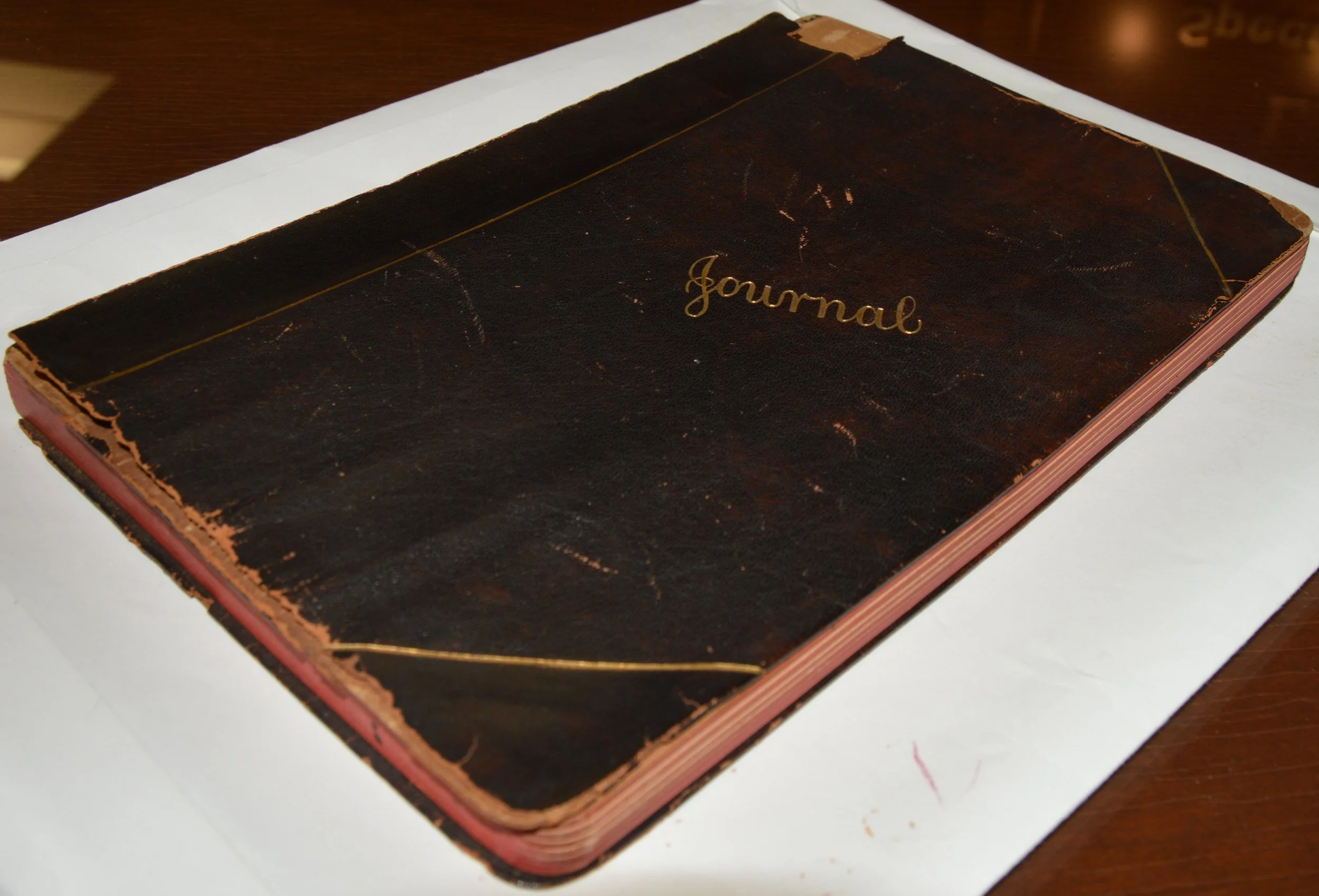
Journal of Reverend Jeremiah Celdonus Sinclair. Photo by author. (2019) Sinclair's journal is a hidden gem of American occultism. Had I not been conducting research for a book project dedicated to Midwestern occultism, I would never have found the obscure document. While conducting research for that project, I found a brief entry describing Sinclair’s journal in the Archives of Ohio United Methodism located at the L.A. Beeghly Library on the campus of Ohio Wesleyan University in Delaware, Ohio. To my knowledge, Sinclair's manuscript has never been the subject of a published historical study. The archivist at the Beeghly Library could not remember anyone else ever requesting to see the Sinclair journal in the past.
In the journal, Sinclair describes visions, spirit guides, out-of-body journeys, prophetic warnings, and encounters with supernatural intelligences and entities. What makes the journal remarkable is not only Sinclair’s vivid descriptions of his otherworldly adventures, but also the minister’s ongoing negotiation between his personal experience of the supernatural and his faith in the theological doctrines of the Methodist Episcopal Church, by which he was ordained.
Sinclair did not identify as an occultist, nor did he believe that his supernatural practices and beliefs ran contrary to his Christian faith. Yet, he was careful about sharing his expeeiences with his colleagues and congregants. This is because he knew many of them would view his ideas with disapproval and condemnation. In the privacy of his home, Sinclair was an astral traveler, a supernatural communicator, and a visionary of apocalyptic proportions. In public, Sinclair was a minister doing what other ministers do: preaching, serving congregants, and bringing souls to Christ.
Despite the necessary secrecy, Sinclair felt it was important to record his supernatural insights. On December 13, 1902, Sinclair wrote his first name on the cover page of the journal. Under his name, Sinclair pasted a photograph of a young child with flowing curls.Sinclair never explains why this child’s angelic face appears at the beginning of the manuscript, leaving that mystery for the reader to contemplate independently.
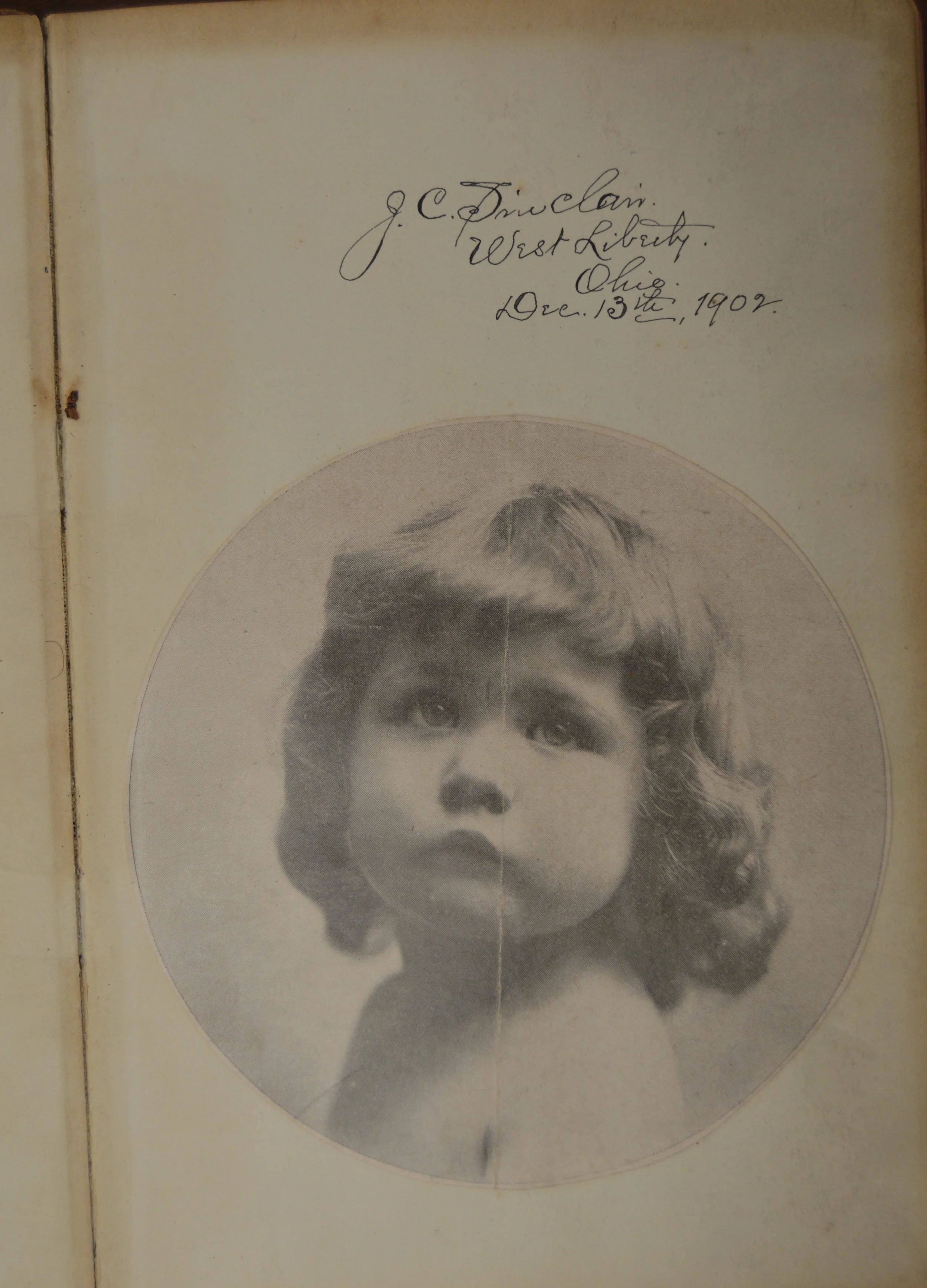
Cover page of Reverend Sinclair's journal. Photo by author. (2019)On December 14, 1902, Sinclair composed the journal's introduction, in which he explains why he felt compelled to keep a journal in the first place. Sinclair recorded his paranormal experiences to contribute to the collective human effort to “solve some of the mysterious manifestations that now and then invade our consciousness in physio-psychological life."
Sinclair considered it a duty to develop his special powers through observation, recording, and practice, because "only he who receives this gift as an endowment can exercise and bring it to a high grade of development." He suspected these powers might be hereditary, writing that he intended to pass the journal "to my sons” in case “this gift may descend to one or all of them." Sinclair had no doubt that his gift was godly in nature. He described the visions recorded in the journal as being "as holy to me as my ordination into the ministry of the Methodist Episcopal Church."
The first astral scene Sinclair recorded in the journal was retrospective. It describes an experience from when he was seventeen. This recorded event marked the first time that Sinclair’s "latent powers" were "called into activity by an emergency." In this case, the emergency was a spiritual crisis surrounding an important decision. Young Sinclair was torn between becoming a lawyer and entering the ministry.
One night after intense prayer over this issue, Sinclair fell asleep only to awaken in the presence of a radiant young woman. She was translucent and luminous, with golden hair and sapphire-blue eyes. Taking Sinclair by hand, the angelic woman led his consciousness outside of his physical body.
What follows reads like a classic account of astral projection. Sinclair looked down upon his sleeping body before traveling away with the mysterious guide through a series of panoramic visions. First, the spirit guide showed Sinclair the life he would live if he pursued a career in law and politics. That future was fated to end in moral ruin and divine condemnation.
The guide then revealed an alternative future in which Sinclair became a Christian minister who helped save souls and triumphed over spiritual struggles in his own life. Convinced by the vision, Sinclair chose "the way of the holy ministry."
The journal continues in this fashion for decades. Sinclair recorded prophetic impressions, visions received while serving congregations, symbolic encounters with strange creatures, and repeated appearances of the unnamed guide he believed accompanied him throughout life.
Throughout the manuscript, Sinclair continues to insist that his “astral scenes” were compatible with Christianity. He repeatedly argues that the Bible contains numerous examples of God communicating through visions, dreams, and supernatural encounters.
Sinclair's manuscript reminds us that the boundary between Christianity and occultism is far more permeable than many suspect.
In coming posts, I will explore more of Sinclair's journal, which reveals a lifelong effort to understand the source of his unusual powers. Were they divine gifts from God, evidence of latent human faculties, encounters with spirits, or something else entirely?